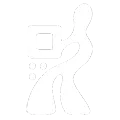
Title: Monument to URS Trade Unions
Author: Stefan Manevski
Year: 1974
The sculpture Monument to the URS is a marble monument made in honor of the United Workers' Trade Unions of Yugoslavia (URSSJ), abbreviated as United Workers' Trade Unions (URS), the strongest and most numerous trade union organization during the period of the existence of the Kingdom of Yugoslavia. URSSJ was founded in 1925. Its work was banned in 1940.
On one side of the monument is engraved:
This was the place where the URS unions were. This was where the army of the enslaved, the fighters for human freedom, the visionaries of a classless society, were steeled.
About the author:
Stefan Manevski (1934-1997), in 1954 he completed his secondary education at the Secondary Art School in Skopje. After two years he enrolled at the Academy of Fine Arts in Belgrade, where he graduated in 1960. While still a student, in 1957 he received his first award, specifically the III Prize for Sculpture of the University Board of Belgrade Students. In 1963, Manevski completed his postgraduate studies at the same academy in the class of Professor Jovan Kratochvil. The same year he returned to his native Skopje and was employed as a teacher of fine arts at the Primary School "Kiril and Metodij", which is located in the city center. He joined the Association of Fine Artists of Macedonia (DLUM) in 1963 and from then on he began to actively create and exhibit.
In 1965, his first solo exhibition was opened at the Workers' Home in Skopje, curated by Vlada Urošević. Increasingly present in the art community, Manevski won even more awards, including the "11 October" award for sculpture in 1968. The same year, another solo exhibition of his was opened at the Museum of Contemporary Art - Skopje (MCA), about which Boris Petkovski wrote: "Stefan Manevski belongs to that part of Macedonian contemporary artists, in whose work a dimension of extraordinary importance for our art culture is taking shape." In 1971, Manevski stayed in Paris as a recipient of the "Mosha Pijade" scholarship, and in the following years he began to undertake larger projects, for example, the relief "Monumental Relief" (ferrous metal and panel, 4 x 2.5 m) from 1978 in the premises of the then Commercial Bank in Skopje.
With the opening of the Faculty of Fine Arts at the University of "Sts. Cyril and Methodius" in Skopje in 1980 and the need for professional staff, Manevski was hired in 1981, and served as Dean of the Faculty for two terms, from 1988 to 1989 and 1995 to 1997. In 1984, his fifth solo exhibition was opened at the Art Gallery (today the National Gallery), which states that "his work is of particular importance for the evolution of Macedonian sculpture". One of his last achievements was the creation of the monumental relief "Untitled" (1993, painted metal and panel, 5.65 x 1.80 m) at the "Rade Končar" factory in 1993. He died suddenly in Skopje on July 12, 1997, at the age of 62.
The place that Stefan Manevski occupies in the Macedonian history of art is due to his exceptionally individual, authentic and refined attitude towards sculptural expression, which follows a logical and upward line of development, especially emphasized in his profound vision of the transformation of metal, a material that offers him endless experimental possibilities through which he translates the multifaceted aesthetic existential experiences of the contemporary world.